- Body Parts Exercise Guides Body Fat Percentage Body Fat Estimation Caliper Table BMR Calculator
These exercises are mostly links and references to the www.bodybuilding.com website. Please check the original site for more detailed info and goodies.
Searching. Please wait...
Showing 901-915 of 1,081 items.
| Main Muscle Trained | Name | Alternate Names | Auxiliary Muscles | Equipment | Mechanics Type | Exercise Level | Sport | Force | Instructions | Alternative Exercises | Videos | External Url Info | Comments | |
|---|---|---|---|---|---|---|---|---|---|---|---|---|---|---|
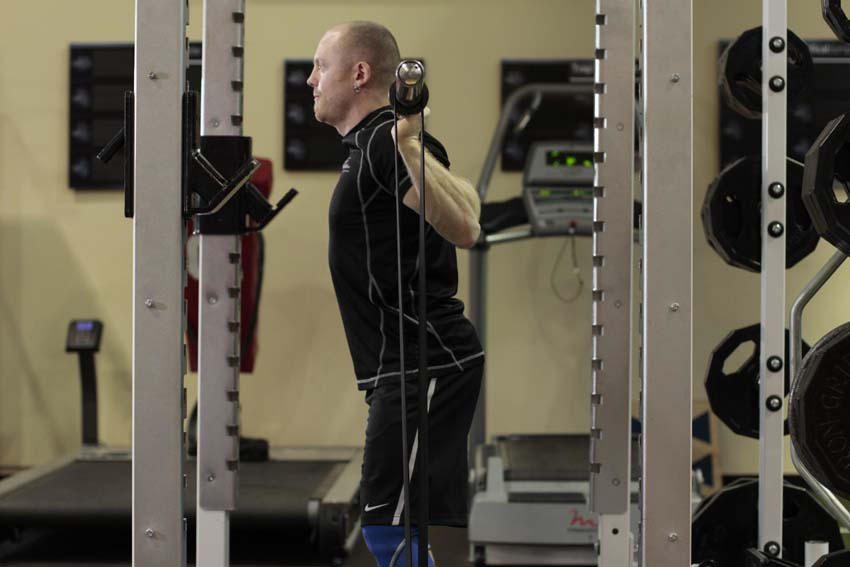 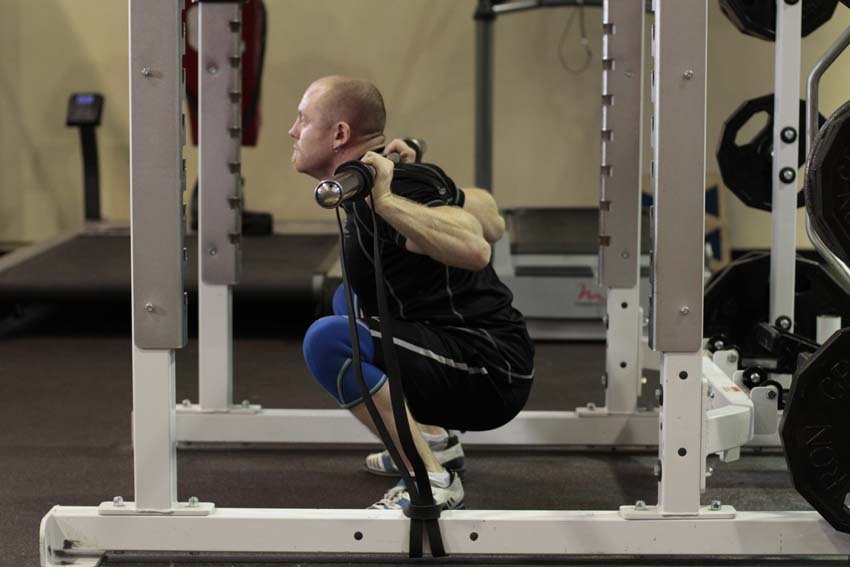 | 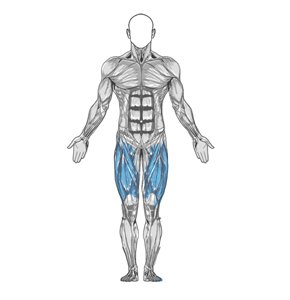 Quadriceps | Squat with Bands | (not set) | [6,8,9,11] | 2 | 1 | Intermediate | 0 | Push | 1) Set up the bands on the sleeves, secured to either band pegs, the rack, or dumbbells so that there is appropriate tension. <br /> 2) Begin by stepping under the bar and placing it across the back of the shoulders. Squeeze your shoulder blades together and rotate your elbows forward, attempting to bend the bar across your shoulders. Remove the bar from the rack, creating a tight arch in your lower back, and step back into position. Place your feet wide for more emphasis on the back, glutes, adductors, and hamstrings. Keep your head facing forward.<br /> 3) With your back, shoulders, and core tight, push your knees and butt out and you begin your descent. Sit back with your hips as much as possible. Ideally, your shins should be perpendicular to the ground. Lower bar position necessitates a greater torso lean to keep the bar over the heels. Continue until you break parallel, which is defined as the crease of the hip being in line with the top of the knee. <br /> 4) Keeping the weight on your heels and pushing your feet and knees out, drive upward as you lead the movement with your head. Continue upward, maintaining tightness head to toe, until you have returned to the starting position.<br /> | Reverse Band Power Squat/ / Squat with Chains | http://www.bodybuilding.com/exercises/detail/view/name/squat-with-bands | ||
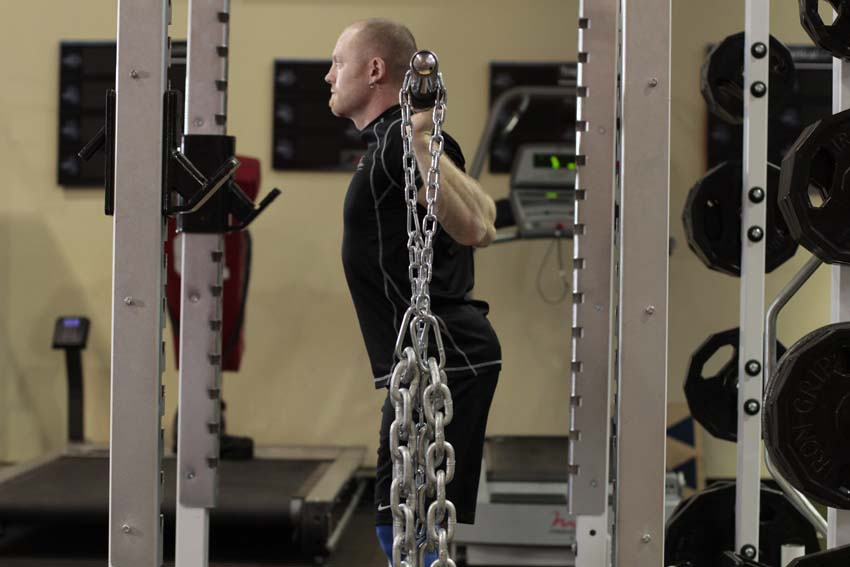 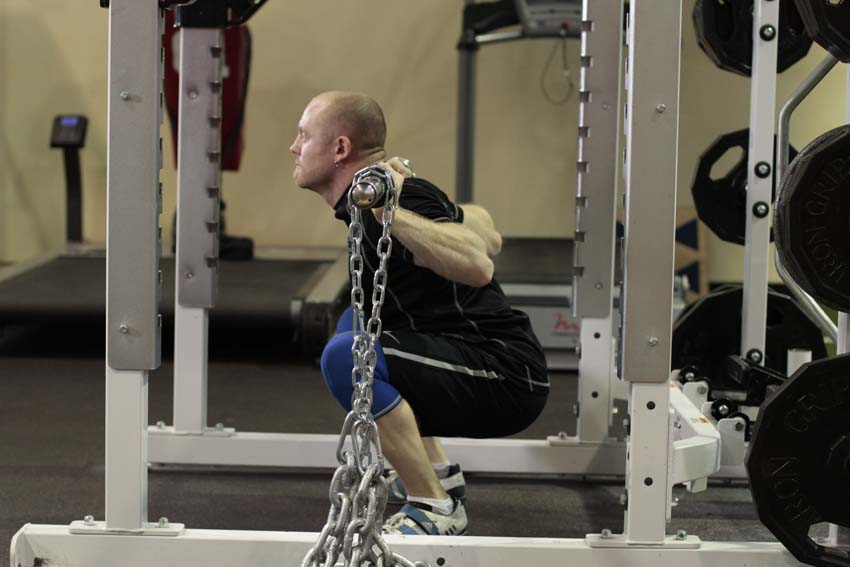 | 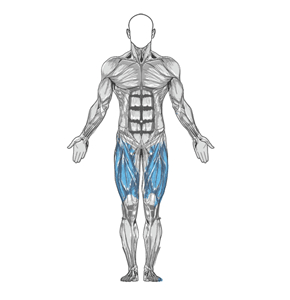 Quadriceps | Squat with Chains | (not set) | [6,8,9,11] | 2 | 1 | Intermediate | 0 | Push | 1) To set up the chains, begin by looping the leader chain over the sleeves of the bar. The heavy chain should be attached using a snap hook. Adjust the length of the lead chain so that a few links are still on the floor at the top of the movement.<br /> 2) Begin by stepping under the bar and placing it across the back of the shoulders. Squeeze your shoulder blades together and rotate your elbows forward, attempting to bend the bar across your shoulders. Remove the bar from the rack, creating a tight arch in your lower back, and step back into position. Place your feet wide for more emphasis on the back, glutes, adductors, and hamstrings. Keep your head facing forward.<br /> 3) With your back, shoulders, and core tight, push your knees and butt out and you begin your descent. Sit back with your hips as much as possible. Ideally, your shins should be perpendicular to the ground. Lower bar position necessitates a greater torso lean to keep the bar over the heels. Continue until you break parallel, which is defined as the crease of the hip being in line with the top of the knee. <br /> 4) Keeping the weight on your heels and pushing your feet and knees out, drive upward as you lead the movement with your head. Continue upward, maintaining tightness head to toe, until you have returned to the starting position.<br /> | Reverse Band Box Squat/ / Reverse Band Power Squat/ / Squat with Bands | http://www.bodybuilding.com/exercises/detail/view/name/squat-with-chains | ||
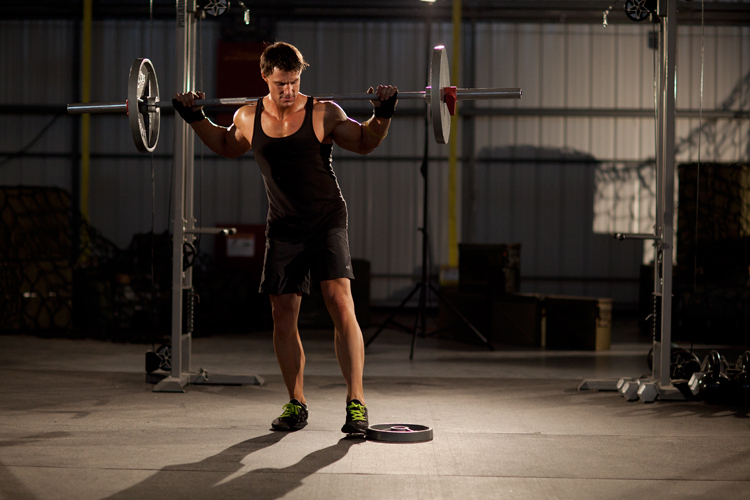 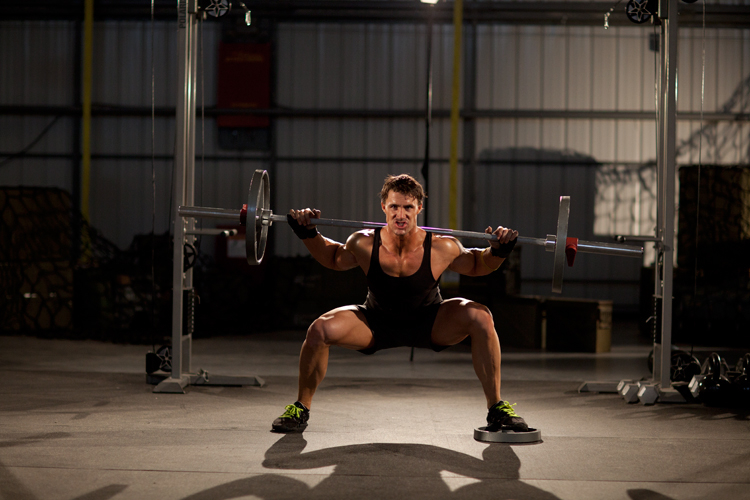 | 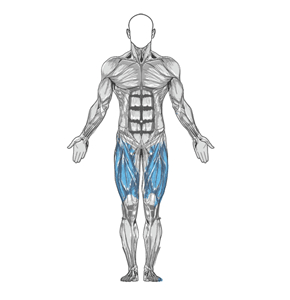 Quadriceps | Squat with Plate Movers | (not set) | [5,6,8,9] | 2 | 1 | Intermediate | 0 | Push | 1) To begin, first set the bar on a rack to just below shoulder level. Position a weight plate on the ground a couple feet back from the rack. Once the bar is loaded, step under it and place the back of your shoulders across it. <br /> 2) Hold on to the bar with both hands and lift it off the rack by first pushing with your legs and at the same time straighten your torso. <br /> 3) Step away from the rack and adopt a wide stance with the toes slightly pointed out, with one foot on the weight plate. Keep your head up at all times. This will be your starting position. <br /> 4) Begin to slowly lower the bar by bending the knees and hips. Continue down until the angle between the upper leg and the calves becomes slightly less than 90-degrees. <br /> 5) Raise the bar as you exhale by pushing the floor with the heels of your feet as you extend the hips and knees. <br /> 6) At the top of the movement, side step, bringing your feet together on the opposite side of the plate. <br /> 7) Using your inside foot, push the weight plate, sliding it across the floor to where you were just standing. <br /> 8) Place your inside foot on the weight plate, adopting a wide stance for the next repetition. <br /> | Wide Stance Barbell Squat | http://www.bodybuilding.com/exercises/detail/view/name/squat-with-plate-movers | ||
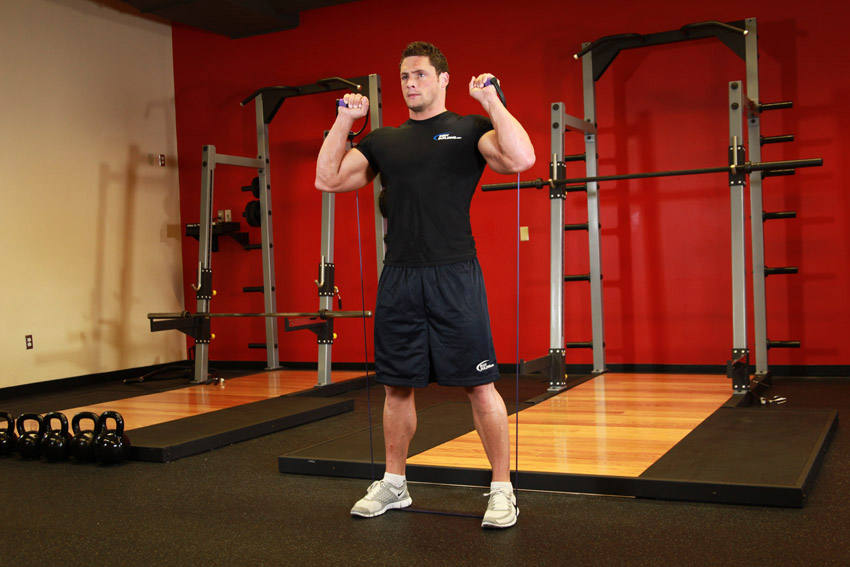 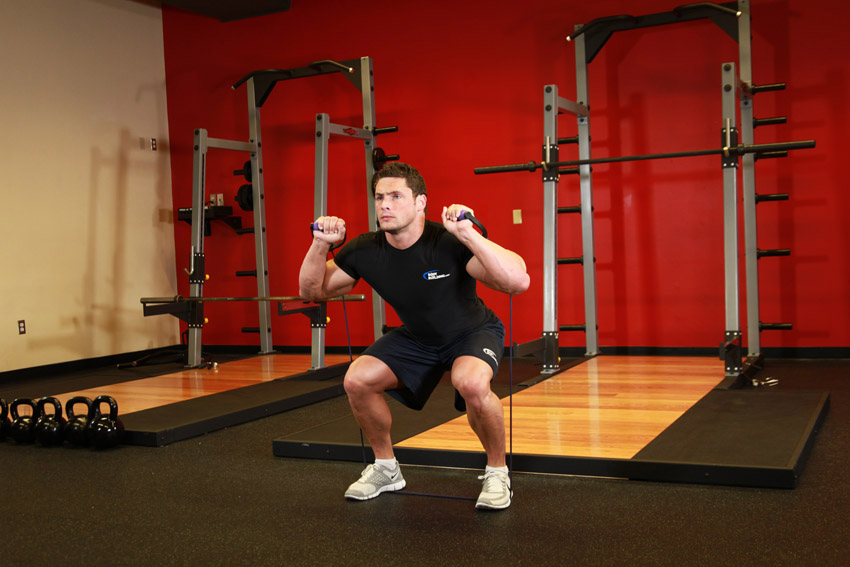 | 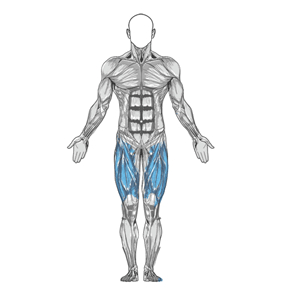 Quadriceps | Squats - With Bands | (not set) | [6,8,9,11] | 1 | 1 | Beginner | 0 | Push | 1) To start out, make sure that the exercise band is at an even split between both the left and right side of the body. To do this, use your hands to grab both sides of the band and place both feet in the middle of the band. Your feet should be shoulder width apart from each other.<br /> 2) When holding the bands, they should be the same height on each side. You should be using a pronated grip (palms facing forward) and have the handles of the bands next to your face for this exercise. This is the starting position.<br /> 3) Slowly start to bend the knees and lower the legs so that your thighs are parallel to the floor while exhaling.<br /> 4) Use the heel of your feet to push your body up to the starting position as you exhale.<br /> 5) Repeat for the recommended amount of repetitions.<br /> | Front Barbell Squat/ / Front Barbell Squat To A Bench/ / Front Squats With Two Kettlebells | http://www.bodybuilding.com/exercises/detail/view/name/squats-with-bands | ||
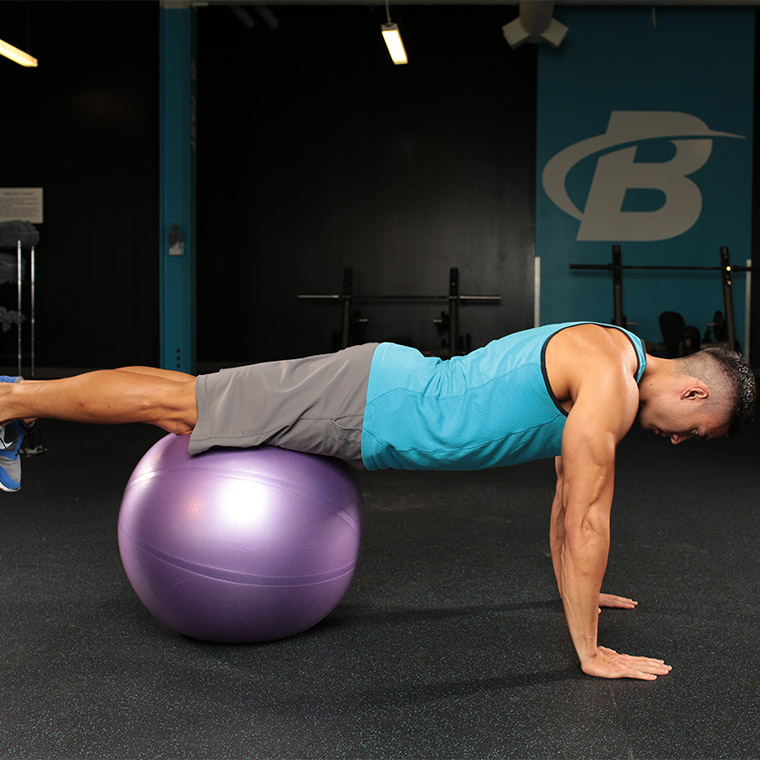 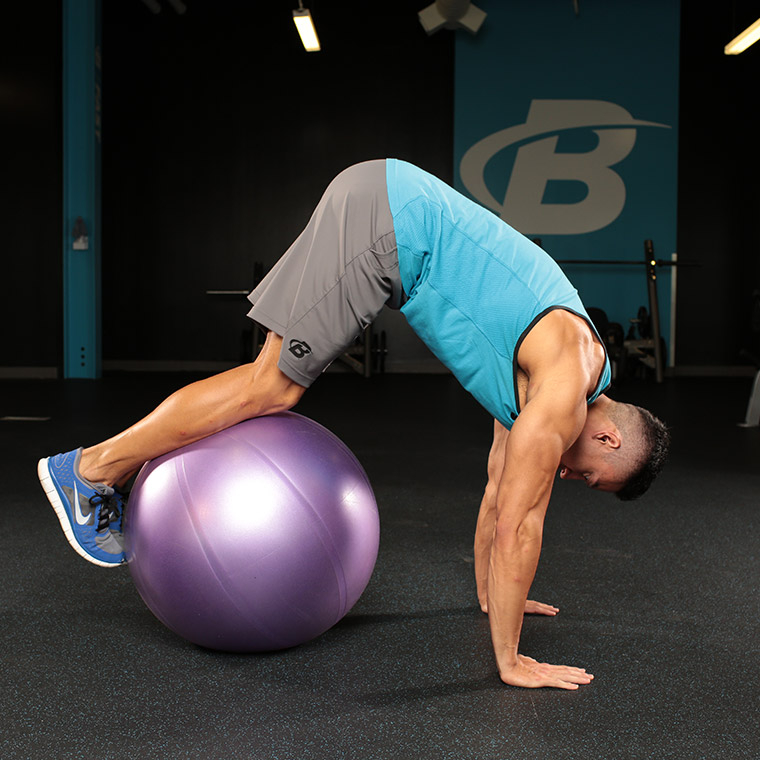 | 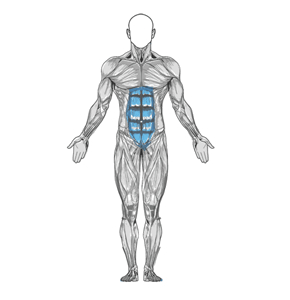 Abdominals | Stability Ball Pike With Knee Tuck | (not set) | (not set) | 6 | 1 | Intermediate | 0 | Pull | 1) Get in the push-up position with your hands shoulder-width apart, securing a large stability ball under your lower quads. Your body should be almost straight with your feet together off the floor. This is your start position. <br /> 2) Contract your lower abs to raise your hips as high as you can, allowing the ball to roll down to your shins under control and bringing your knees into your chest. <br /> 3) Push your knees back out and allow your abs to relax to roll the ball back in the reverse direction. <br /> 4) Repeat for the required number of reps. <br /> | http://www.bodybuilding.com/exercises/detail/view/name/stability-ball-pike-with-knee-tuck | |||
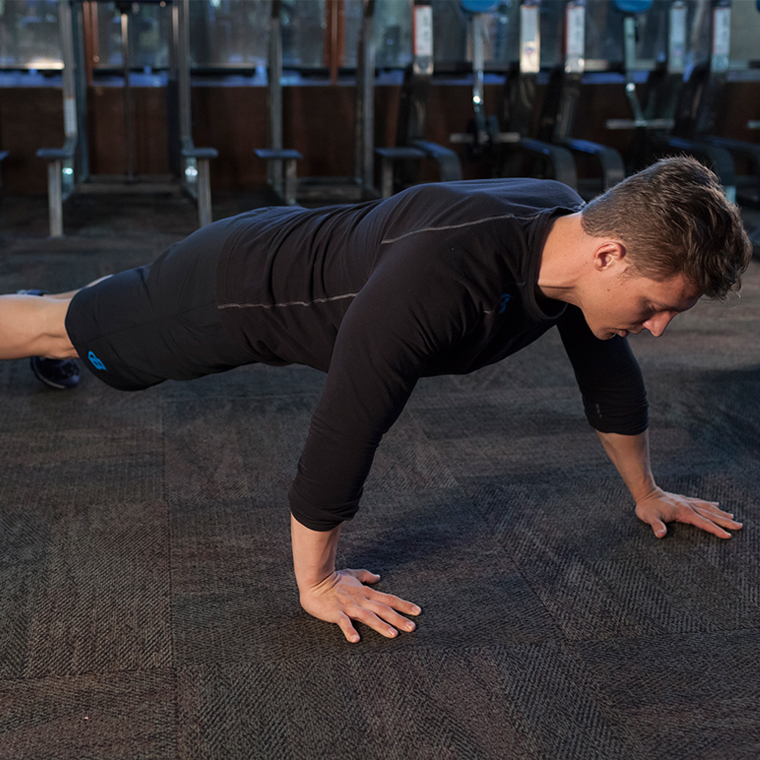 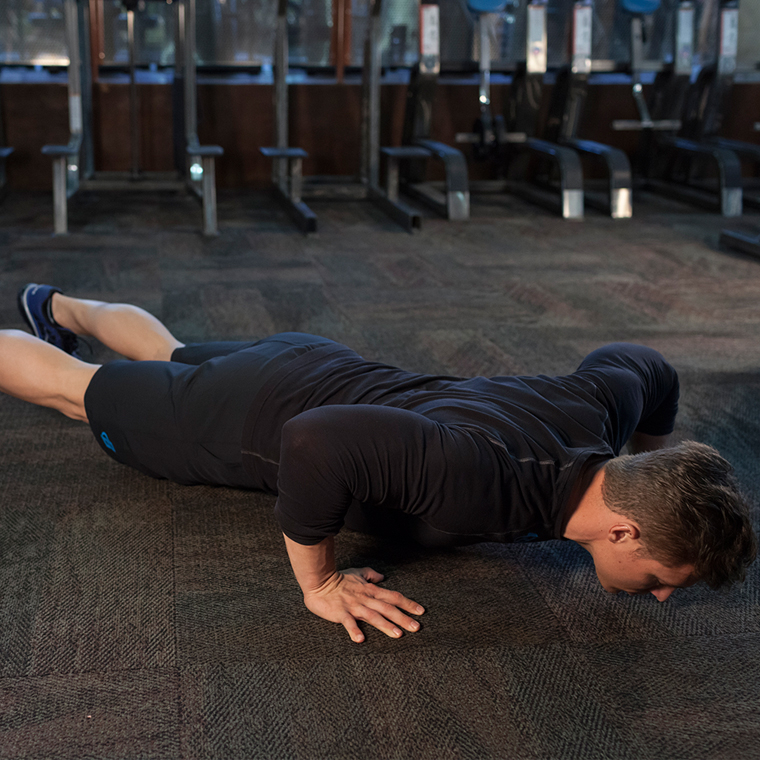 | 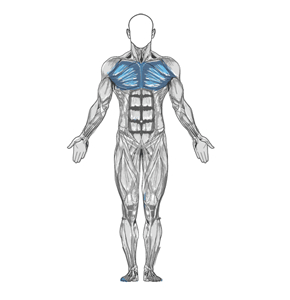 Chest | Staggered Push-Up | (not set) | [1,2] | 0 | 1 | Beginner | 0 | Push | 1) Assume a prone position with your body straight, supported by your extended arms and your toes. Your hands should be outside of shoulder width but staggered, with one being higher than the other. This will be your starting position. <br /> 2) Initiate the movement by flexing the elbows, lowering your torso to the ground. Do not allow your hips to rise or to sag. <br /> 3) Pause at the bottom of the motion, and then extend at the elbows to return to the starting position. <br /> 4) At the completion of this set, reverse your hand position for the next round. <br /> | Pushups | http://www.bodybuilding.com/exercises/detail/view/name/staggered-push-up | ||
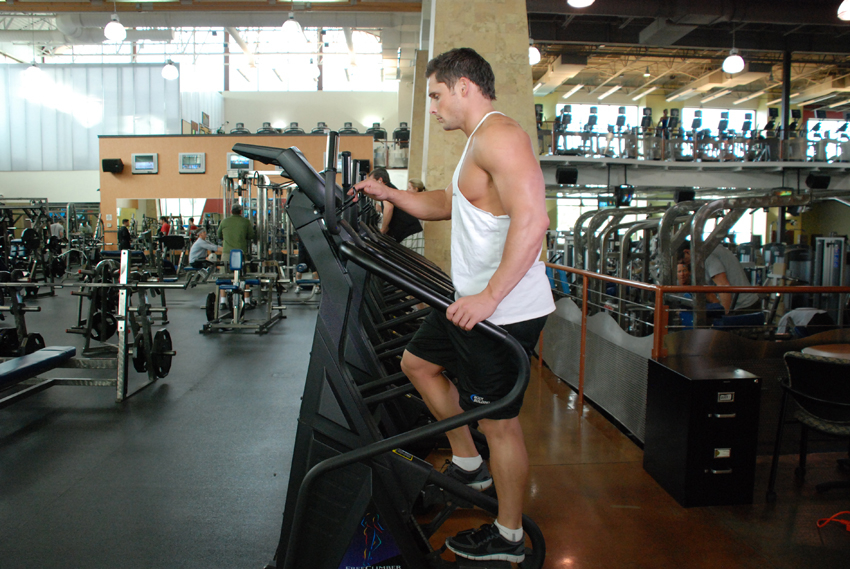 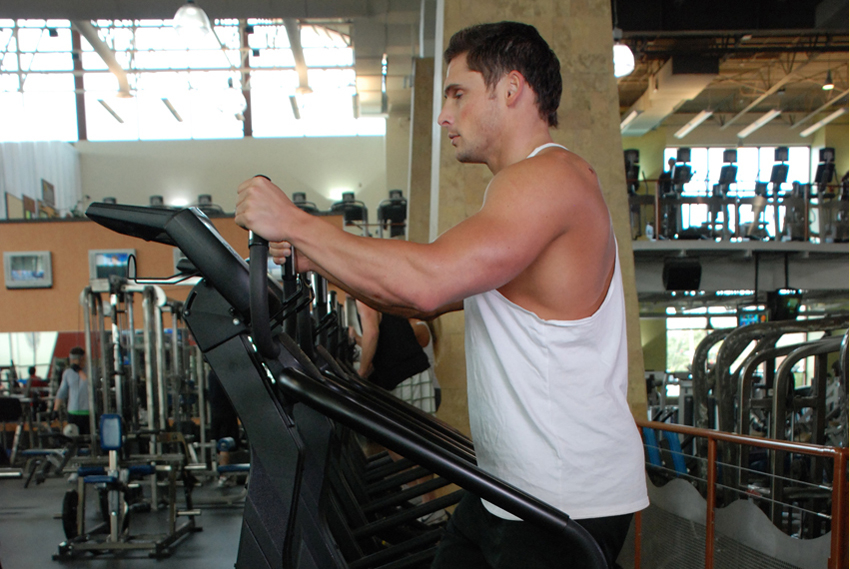 | 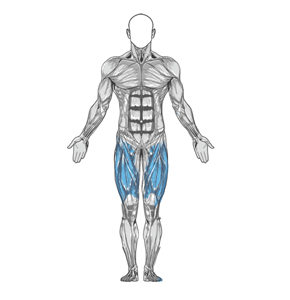 Quadriceps | Stairmaster | (not set) | [6,8,9] | 10 | 0 | Intermediate | 0 | None | 1) To begin, step onto the stairmaster and select the desired option from the menu. You can choose a manual setting, or you can select a program to run. Typically, you can enter your age and weight to estimate the amount of calories burned during exercise. <br /> 2) Pump your legs up and down in an established rhythm, driving the pedals down but not all the way to the floor. It is recommended that you maintain your grip on the handles so that you don’t fall. The handles can be used to monitor your heart rate to help you stay at an appropriate intensity.<br /> 3) Stairmasters offer convenience, cardiovascular benefits, and usually have less impact than running outside. They are typically much harder than other cardio equipment. A 150 lb person will typically burn over 300 calories in 30 minutes, compared to about 175 calories walking. <br /> | http://www.bodybuilding.com/exercises/detail/view/name/stairmaster | |||
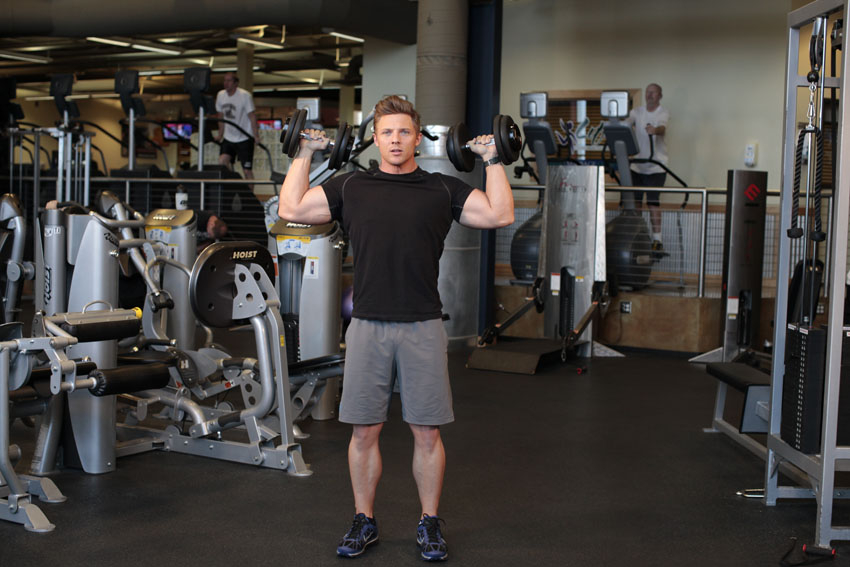 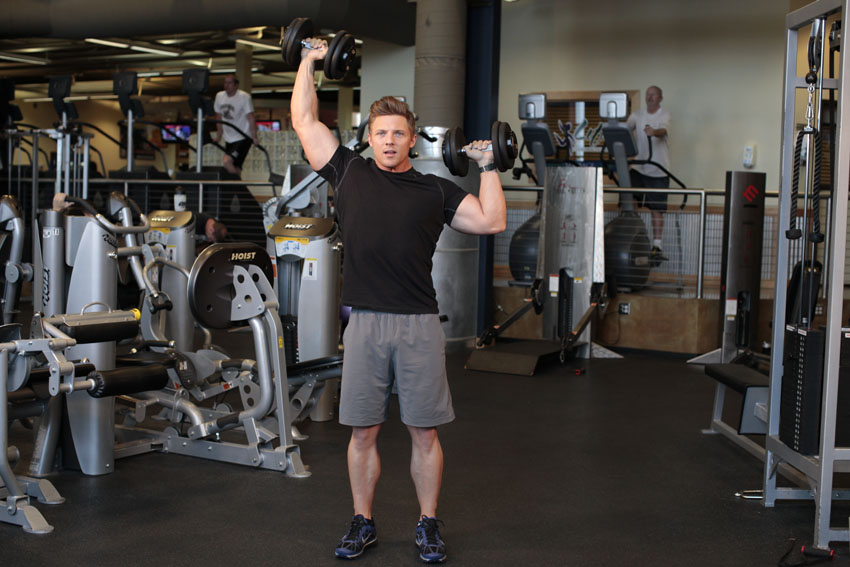 | 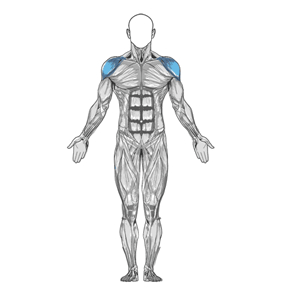 Shoulders | Standing Alternating Dumbbell Press | (not set) | [2] | 4 | 1 | Beginner | 0 | Push | 1) Stand with a dumbbell in each hand. Raise the dumbbells to your shoulders with your palms facing forward and your elbows pointed out. This will be your starting position.<br /> 2) Extend one arm to press the dumbbell straight up, keeping your off hand in place. Do not lean or jerk the weight during the movement. <br /> 3) After a brief pause, return the weight to the starting position.<br /> 4) Repeat for the opposite side, continuing to alternate between arms. <br /> | Cable Shoulder Press/ / Shoulder Press - With Bands | http://www.bodybuilding.com/exercises/detail/view/name/standing-alternating-dumbbell-press- | ||
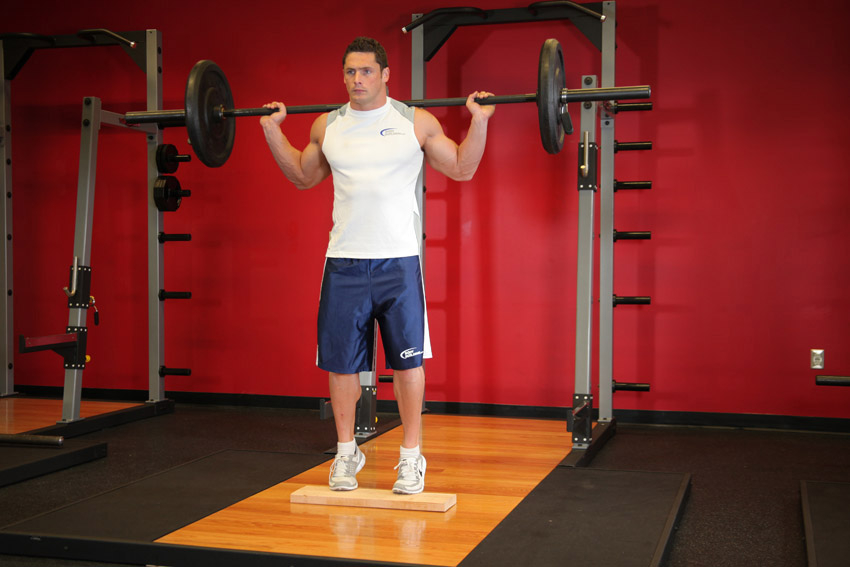 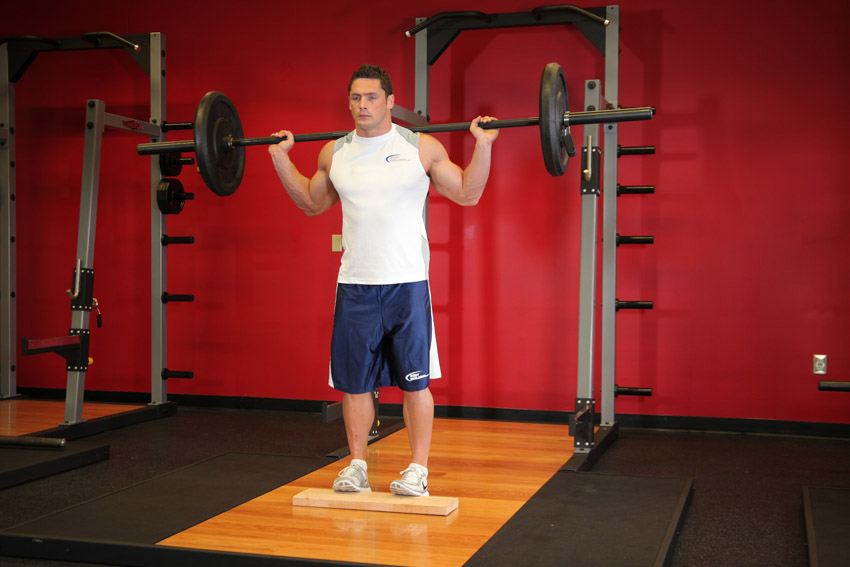 | 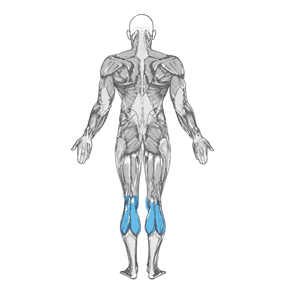 Calves | Standing Barbell Calf Raise | (not set) | (not set) | 2 | 2 | Beginner | 0 | Push | 1) This exercise is best performed inside a squat rack for safety purposes. To begin, first set the bar on a rack that best matches your height. Once the correct height is chosen and the bar is loaded, step under the bar and place the bar on the back of your shoulders (slightly below the neck).<br /> 2) Hold on to the bar using both arms at each side and lift it off the rack by first pushing with your legs and at the same time straightening your torso.<br /> 3) Step away from the rack and position your legs using a shoulder width medium stance with the toes slightly pointed out. Keep your head up at all times as looking down will get you off balance and also maintain a straight back. The knees should be kept with a slight bend; never locked. This will be your starting position. <br /> Tip:<br /> For better range of motion you may also place the ball of your feet on a wooden block but be careful as this option requires more balance and a sturdy block.<br /> 4) Raise your heels as you breathe out by extending your ankles as high as possible and flexing your calf. Ensure that the knee is kept stationary at all times. There should be no bending at any time. Hold the contracted position by a second before you start to go back down.<br /> 5) Go back slowly to the starting position as you breathe in by lowering your heels as you bend the ankles until calves are stretched.<br /> 6) Repeat for the recommended amount of repetitions.<br /> <br /> Caution:<br /> If you suffer from lower back problems, a better exercise is the calf press as during a standing calf raise the back has to support the weight being lifted. Also, maintain your back straight and stationary at all times. Rounding of the back can cause lower back injury.<br /> <br /> Variations:<br /> There are several other ways to perform a standing calf raise. A calf press machine instead of a squat rack can be used as well as dumbbells with one leg or two legs at a time. A smith machine can be used for calf raises as well. You can also perform the barbell calf raise using a piece of wood to place the ball of the foot. This will allow you to get a better range of motion. However be cautious as in this case you will need to balance yourself much better.<br /> | Donkey Calf Raises | http://www.bodybuilding.com/exercises/detail/view/name/standing-barbell-calf-raise | ||
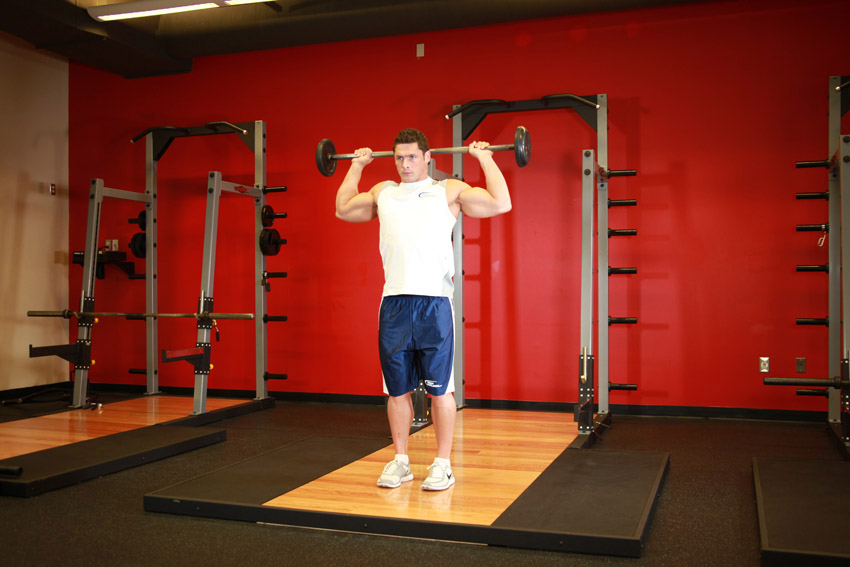 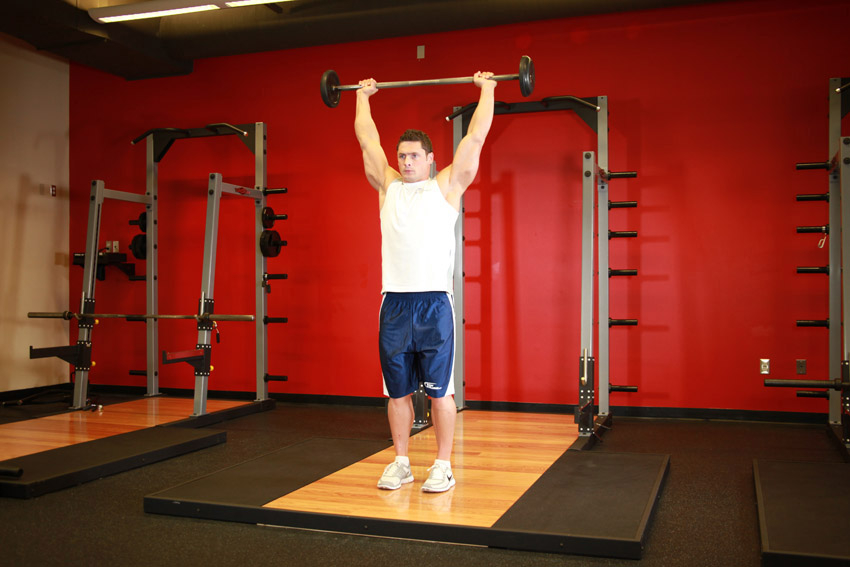 | 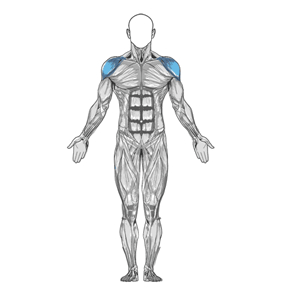 Shoulders | Standing Barbell Press Behind Neck | ["Behind Neck Press"," Overhead Press"] | [2] | 2 | 1 | Intermediate | 0 | Push | 1) This exercise is best performed inside a squat rack for easier pick up of the bar. To begin, first set the bar on a rack that best matches your height. Once the correct height is chosen and the bar is loaded, step under the bar and place the back of your shoulders (slightly below the neck) across it.<br /> 2) Hold on to the bar using both arms at each side and lift it off the rack by first pushing with your legs and at the same time straightening your torso.<br /> 3) Step away from the rack and position your legs using a shoulder width medium stance with the toes slightly pointed out. Your back should be kept straight while performing this exercise. This will be your starting position.<br /> 4) Elevate the barbell overhead by fully extending your arms while breathing out.<br /> 5) Hold the contraction for a second and lower the barbell back down to the starting position by inhaling.<br /> 6) Repeat for the recommended amount of repetitions.<br /> <br /> Caution:<br /> Performing this exercise can cause serious injury if not performed properly. Make sure to keep your back straight when lowering and lifting the barbell.<br /> | Bradford/Rocky Presses | http://www.bodybuilding.com/exercises/detail/view/name/standing-barbell-press-behind-neck | ||
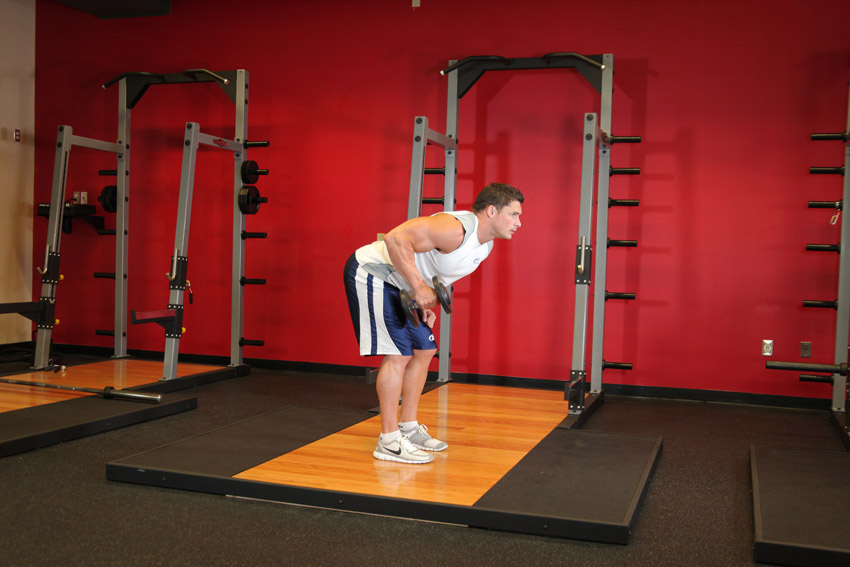 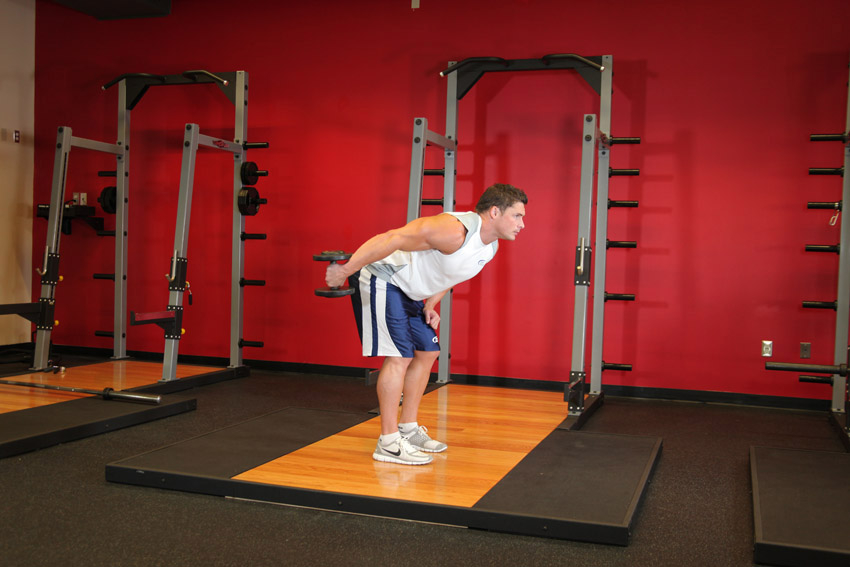 | 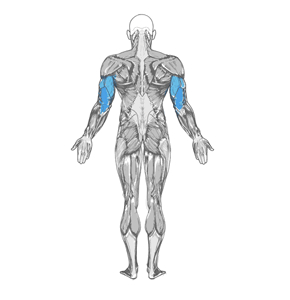 Triceps | Standing Bent-Over One-Arm Dumbbell Triceps Extension | ["Dumbbell Kickbacks"] | [1] | 4 | 2 | Beginner | 0 | Push | 1) With a dumbbell in one hand and the palm facing your torso, bend your knees slightly and bring your torso forward, by bending at the waist, while keeping the back straight until it is almost parallel to the floor. Make sure that you keep the head up.<br /> 2) The upper arm should be close to the torso and parallel to the floor while the forearm is pointing towards the floor as the hand holds the weight. <br /> Tip:<br /> There should be a 90-degree angle between the forearm and the upper arm. This is your starting position.<br /> 3) Keeping the upper arms stationary, use the triceps to lift the weights as you exhale until the forearms are parallel to the floor and the whole arm is extended. Like many other arm exercises, only the forearm moves.<br /> 4) After a second contraction at the top, slowly lower the dumbbell back to the starting position as you inhale.<br /> 5) Repeat the movement for the prescribed amount of repetitions.<br /> 6) Switch arms and repeat the exercise.<br /> | Seated Bent-Over One-Arm Dumbbell Triceps Extension/ / Seated Bent-Over Two-Arm Dumbbell Triceps Extension/ / Tricep Dumbbell Kickback | http://www.bodybuilding.com/exercises/detail/view/name/standing-bent-over-one-arm-dumbbell-triceps-extension | ||
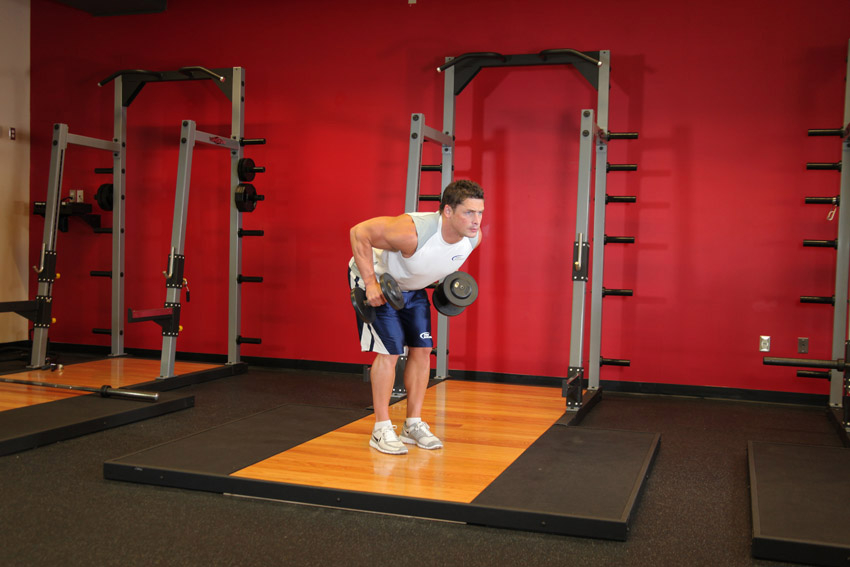 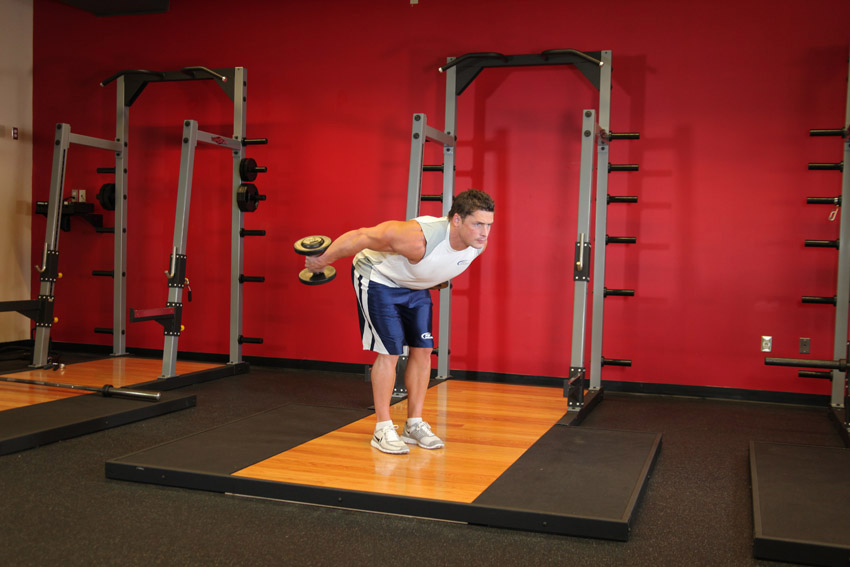 | 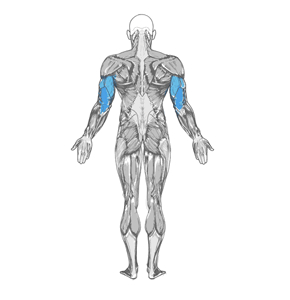 Triceps | Standing Bent-Over Two-Arm Dumbbell Triceps Extension | ["Standing Kickback"] | (not set) | 4 | 2 | Beginner | 0 | Push | 1) With a dumbbell in each hand and the palms facing your torso, bend your knees slightly and bring your torso forward, by bending at the waist, while keeping the back straight until it is almost parallel to the floor. Make sure that you keep the head up. The upper arms should be close to the torso and parallel to the floor while the forearms are pointing towards the floor as the hands hold the weights. <br /> Tip:<br /> There should be a 90-degree angle between the forearms and the upper arm. This is your starting position.<br /> 2) Keeping the upper arms stationary, use the triceps to lift the weights as you exhale until the forearms are parallel to the floor and the whole arms are extended. Like many other arm exercises, only the forearm moves.<br /> 3) After a second contraction at the top, slowly lower the dumbbells back to their starting position as you inhale.<br /> 4) Repeat the movement for the prescribed amount of repetitions.<br /> <br /> Variations:<br /> <br /> 1) This exercise can be executed also one arm at a time.<br /> 2) Also, if you like the one arm variety, you can use a single hand handle or rope attachment instead of a dumbbell for better peak contraction. In this case of the single hand handle, the palms should be facing up as opposed to the torso.<br /> | Seated Bent-Over Two-Arm Dumbbell Triceps Extension/ / Tricep Dumbbell Kickback | http://www.bodybuilding.com/exercises/detail/view/name/standing-bent-over-two-arm-dumbbell-triceps-extension | ||
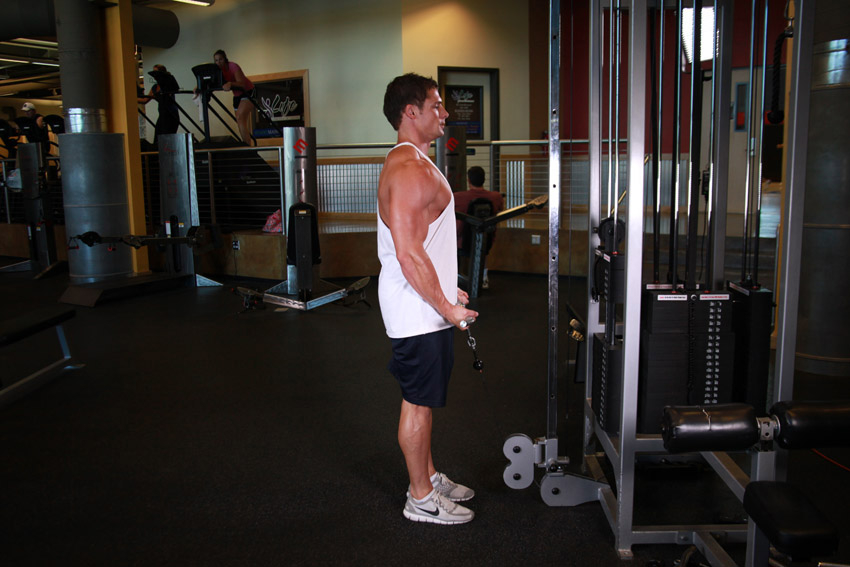 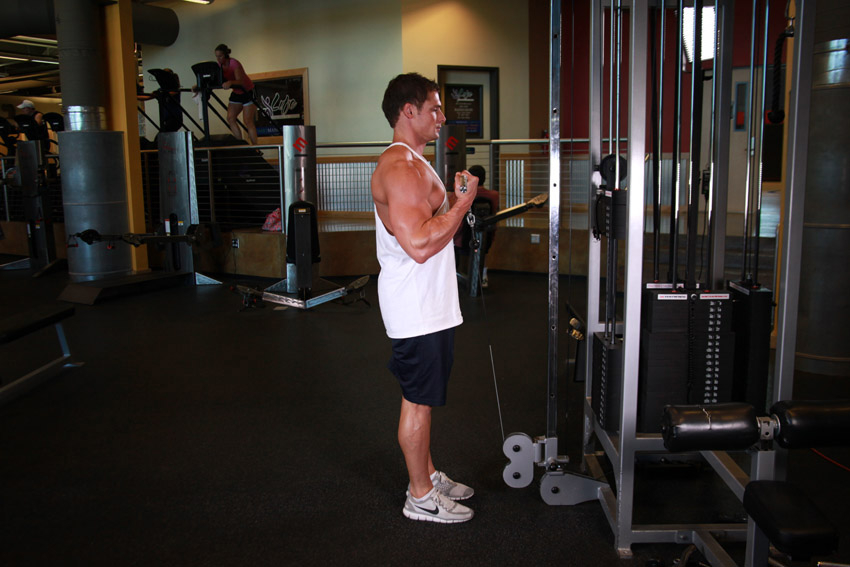 | 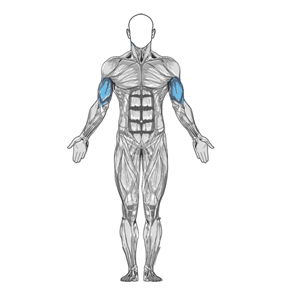 Biceps | Standing Biceps Cable Curl | (not set) | (not set) | 3 | 2 | Beginner | 0 | Pull | 1) Stand up with your torso upright while holding a cable curl bar that is attached to a low pulley. Grab the cable bar at shoulder width and keep the elbows close to the torso. The palm of your hands should be facing up (supinated grip). This will be your starting position.<br /> 2) While holding the upper arms stationary, curl the weights while contracting the biceps as you breathe out. Only the forearms should move. Continue the movement until your biceps are fully contracted and the bar is at shoulder level. Hold the contracted position for a second as you squeeze the muscle.<br /> 3) Slowly begin to bring the curl bar back to starting position as your breathe in.<br /> 4) Repeat for the recommended amount of repetitions.<br /> <br /> Variation:<br /> You can also perform this movement using an E-Z barbell attachment or single handles.<br /> | Barbell Curl/ / EZ-Bar Curl | http://www.bodybuilding.com/exercises/detail/view/name/standing-biceps-cable-curl | ||
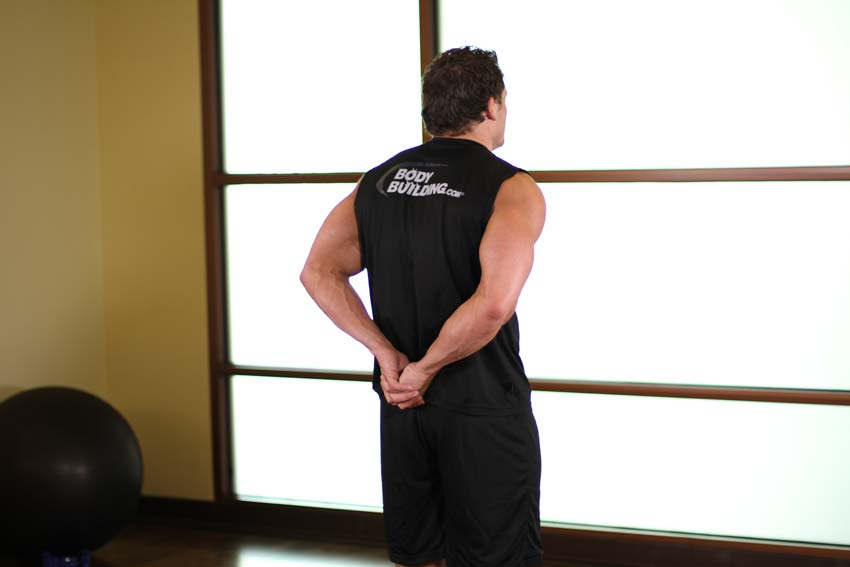 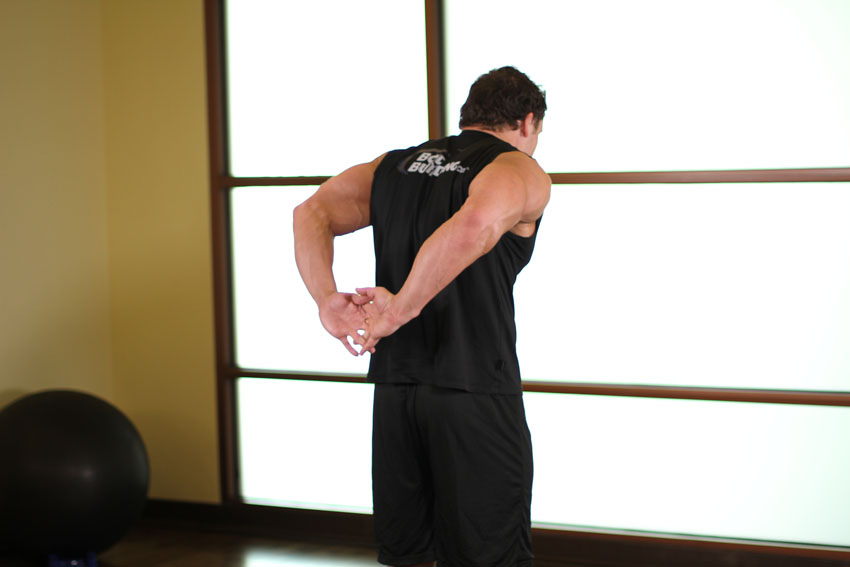 | 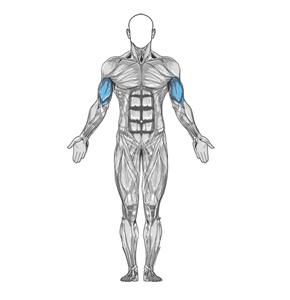 Biceps | Standing Biceps Stretch | (not set) | [4,1] | 11 | 2 | Beginner | 0 | Static | 1) Clasp your hands behind your back with your palms together, straighten arms and then rotate them so your palms face downward.<br /> 2) Raise your arms up and hold until you feel a stretch in your biceps.<br /> | http://www.bodybuilding.com/exercises/detail/view/name/standing-biceps-stretch | |||
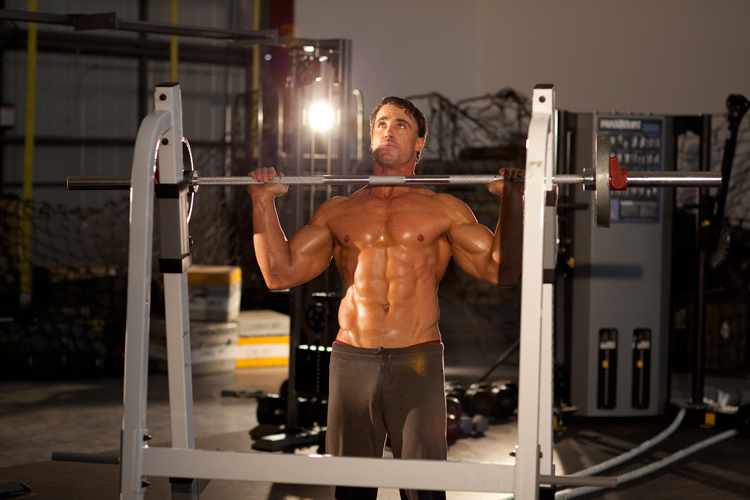 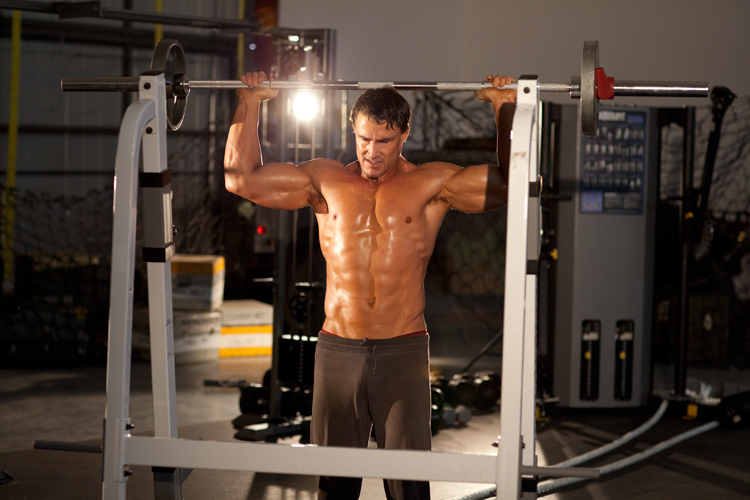 | 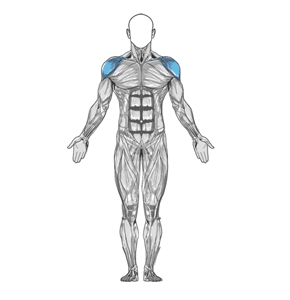 Shoulders | Standing Bradford Press | (not set) | [2] | 2 | 1 | Beginner | 0 | Push | 1) Place a loaded bar at shoulder level in a rack. With a pronated grip at shoulder width, begin with the bar racked across the front of your shoulders. This is your starting position. <br /> 2) Initiate the lift by extending the elbows to press the bar overhead. Avoid locking out the elbow as you move the weight behind your head. <br /> 3) Lower the bar down to the back of the head until your elbow forms a right angle. <br /> 4) Lift the bar back over your head by extending the elbows <br /> 5) Lower the bar down to the starting position. <br /> 6) Alternate in this manner until you complete the recommended amount of repetitions. <br /> | Dumbbell Shoulder Press | http://www.bodybuilding.com/exercises/detail/view/name/standing-bradford-press |
Play Video
Loading, please wait...